I played with one of the wide angle images I had taken and then brought it into Photoshop where I applied a combination of my OnOne filters to the image. Back in the late 70's you had to pay a premium for Ilford IR (Infra Red) film and the special processing for it. The results were worth the extra effort as IR film turns foliage and clouds into glowing soft white surreal landscapes and blue skies into deep, dark blacks and charcoal greys. With the OnOne filters you can add various amounts of IR and soft glow to recreate that spectacular IR effect on landscapes.
 |
| Mount Rundle in Ansel Adams Style |
 |
| Ansel Adams - Yosemite |
Making vs Taking Photos
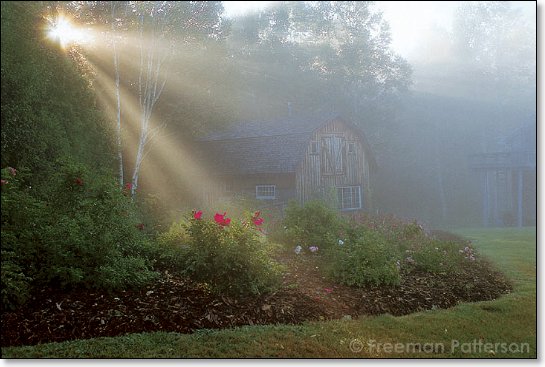
All of the steps in preparing digital images remind me of the lessons I learned in photography from the series of books by the great Canadian photographer Freeman Patterson. The one book "Photography and the Art of Seeing" was inspirational to me to the point that I've used Freeman's philosophy of "seeing" in both my designs and my teaching over the years.
In his first instructional photography book "Photography for the Joy of It", Freeman discusses the difference between taking photos and making them. This distinction is highly instructive of the mental process involved in either taking an ordinary "snapshot" and creating an image that has depth, meaning and artistry.
I was thinking of this distinction while I was going through the process of sorting through hundreds of images in Lightroom. Even though Freeman urges his students to think through an image and "make" the photograph rather than simply "take" it while you're holding the camera, the end process in the digital darkroom has the same thought process. You are constantly questioning various images. As you apply various effects and techniques, you are literally making the photo; creating your final vision.

No comments:
Post a Comment